
In sharp contrast to the ancient models, modern democracies largely lack a structured, institutionalized path for political leadership. While some countries maintain parliamentary traditions that favor those who have served an apprenticeship in public office, many modern systems allow for a rapid and unvetted ascent to power. In the absence of a structured path, the road to the highest office can be driven by celebrity, personal wealth, or media presence rather than a demonstrated record of public service.
This is a journey to understand how other successful democracies organize themselves, and what lessons they might hold for the UK, including the powerful examples of consensus from Switzerland, Belgium, and the Netherlands.
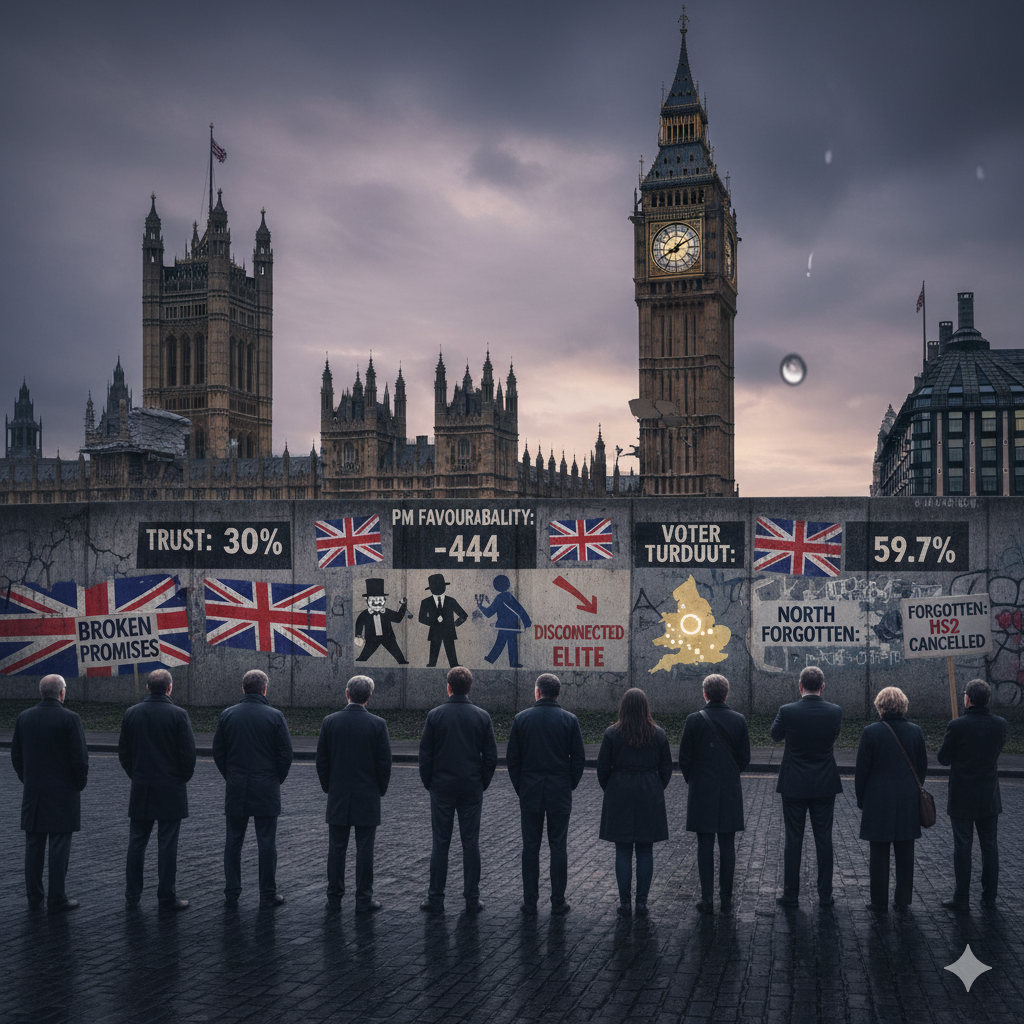
The scope of the UK’s legitimacy crisis is breathtaking, growing with a corrosive pace that our political institutions are ill-equipped to address. The emotional and psychological toll on citizens has become immense, fostering a disconnection that threatens the very integrity of our political compact.
The path to a better future doesn’t start with a conspiracy theory. It begins with the courage to look past the easy narrative of evil geniuses and to hold our leaders accountable not for their presumed malevolence, but for their undeniable incompetence.