The Great Devolution Deception

We are told the British state is reforming itself, but current devolution proposals merely relocate centralised power rather than dismantling it. We don’t need “devolution by permission” from Westminster; we need a radical, high-trust constitutional rewrite.

Continue Reading →

The Stage of Discord

Modern corruption in Westminster rarely takes the form of brown envelopes; it is far more polite, codified in the language of “professional services.”. It is the seamless transition from the heights of public office to the boardrooms of the private sector.

Continue Reading →

An Oath for a Better Tomorrow: Why the Bell Principles Should Bind All UK Politicians

Public faith in Parliament is at an all-time low, fueled by a relentless stream of financial scandals, ethical lapses, and a general sense of political exceptionalism. The current system relies on internal party mechanisms and non-binding parliamentary codes of conduct, which notoriously lack real teeth.

Continue Reading →

The Constitutional Mandate for Adaptive Governance: Securing Liberty Against Exponential Technological and Ecological Shock

The core harm of this system is the moral catastrophe of dissolution: the failure of a fixed framework to safeguard the sacred rights of property, security, and liberty from threats that operate on a technological, not political, timeline. The governing instruments, conceived during the Enlightenment era, were primarily designed to check political power and defend against tyranny. Today, the state faces exponential, non-human, and systemic threats, from hyper-automation to climate collapse, which traditional amendments and policy debates are tragically slow to address.

Continue Reading →

The Viable Environment: Why Climate Stewardship is the Supreme Constitutional Right 🌳

Ecological viability is not merely a policy goal; it is the foundational environmental right upon which the value of all other human rights depends. Without a viable environment—a stable atmosphere, uncontaminated resources, and predictable seasonal cycles—the Constitution becomes a ghost document—a historical testament to rights we can no longer afford to exercise. The time has come to elevate The Right to a Viable Environment to the status of supreme law

Continue Reading →

The Philosopher’s Blueprint: A Cast-Iron Constitution for the 21st Century

We need a new, modern, written Instrument of Government—a cohesive blueprint—that draws on the lessons of the past and finally confronts these unresolved tensions head-on. This confrontation demands a complete architectural overhaul, moving beyond the traditional tripartite separation of powers to institutionalize a new, autonomous Fourth Pillar designed to safeguard economic stability and institutional integrity.

Continue Reading →

Reforming the House of Lords: A Blueprint for a Federal Britain

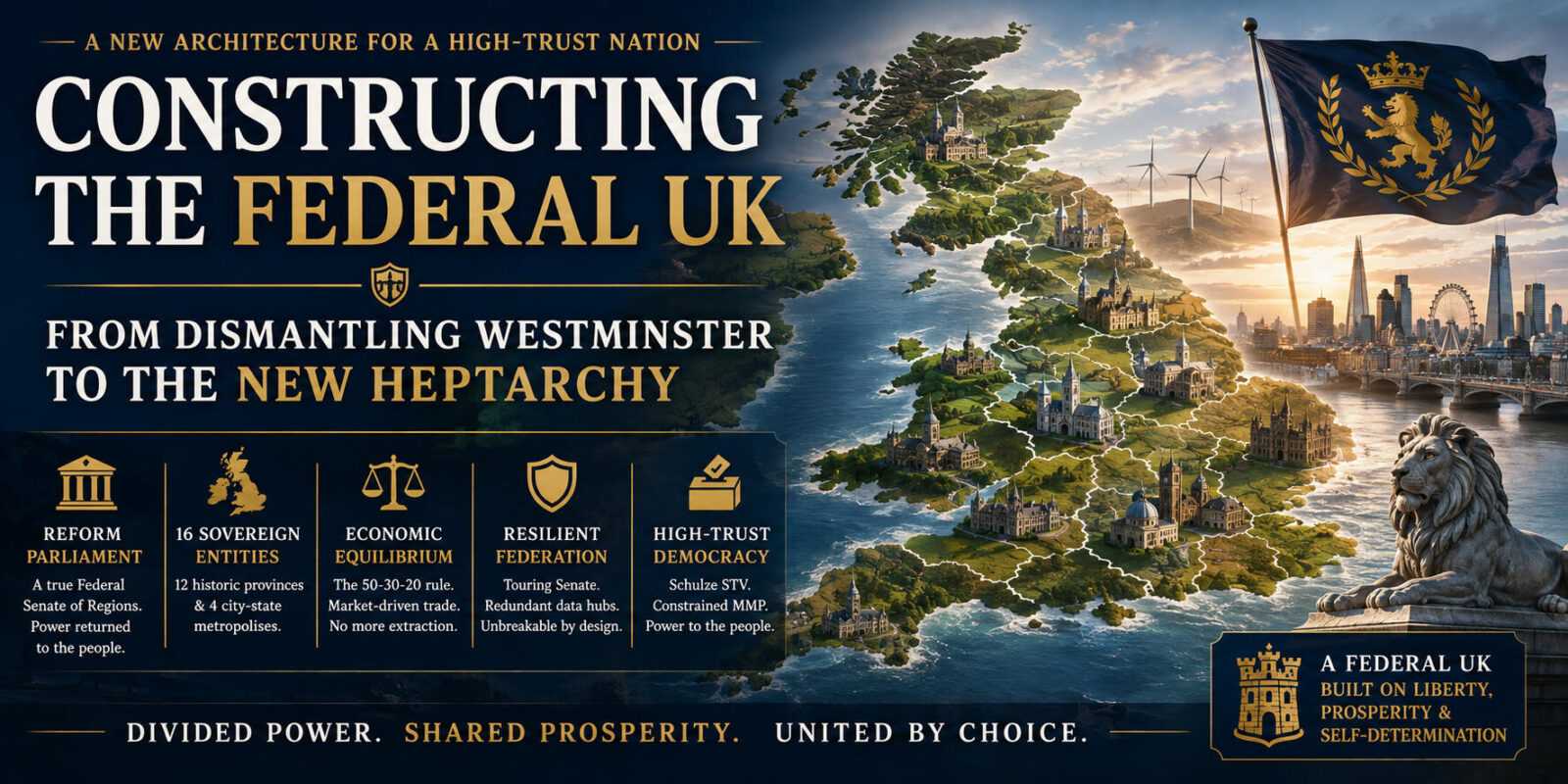
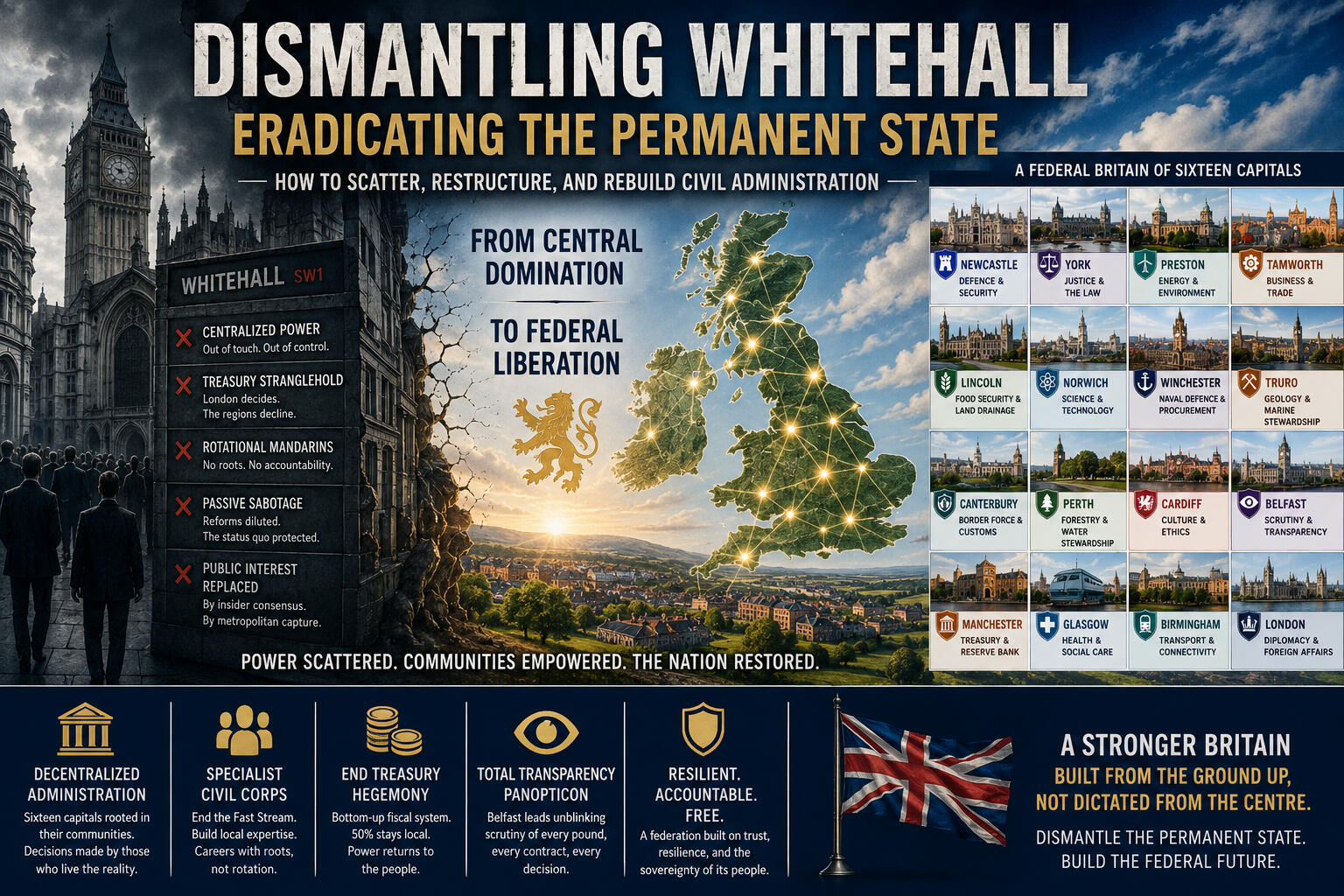
The time has come to complete the unfinished business of constitutional reform. We must move beyond piecemeal changes and build a new, fully elected upper chamber that is truly fit for the 21st century. This new chamber would not only provide a powerful democratic check on the House of Commons but would also serve as the beating heart of a federal Britain

Continue Reading →

A Case for a Federal Britain: The Vision of a Devolved UK

Some counties, like Yorkshire, possess the identity, culture, and critical mass to stand as a region in its own right, with a distinct economic engine and a population larger than Scotland. Other counties would be at liberty to form clusters, with the consent of their populations, to create new county regions with a shared identity and governance.

Continue Reading →

The Disposable Generation: How the Corporate-Political Elite Declared an Age War on the Young đŸ§‘â€đŸ’»

Older workers currently occupying these exact roles were often hired with no qualifications at all; they walked into a local business, “shook hands, and got the job,” without an interview, without a CV and often without even having finished formal education. Now, corporations demand a Bachelor’s degree for a job that is considered “entry-level,”

Continue Reading →