We have reached a point in our political discourse where privacy is treated as a luxury for the guilty. When confronted with the encroaching shadow of the UK’s Online Safety Act (2023) or the EU’s “Chat Control” mandates, the modern citizen often shrugs. “I have nothing to hide,” they say. “What does it matter if a shop knows I like tomatoes? What harm is there in a website knowing my age?”
It is the story of a “Silent Majority”—a group often dismissed by the metropolitan commentariat as apathetic or “left behind.” In reality, this majority is neither silent by choice nor apathetic by nature; they are exhausted.
Modern corruption in Westminster rarely takes the form of brown envelopes; it is far more polite, codified in the language of “professional services.”. It is the seamless transition from the heights of public office to the boardrooms of the private sector.
The British State has become a failing firm. It has stopped maintaining its machinery while its board members continue to draw dividends of power.
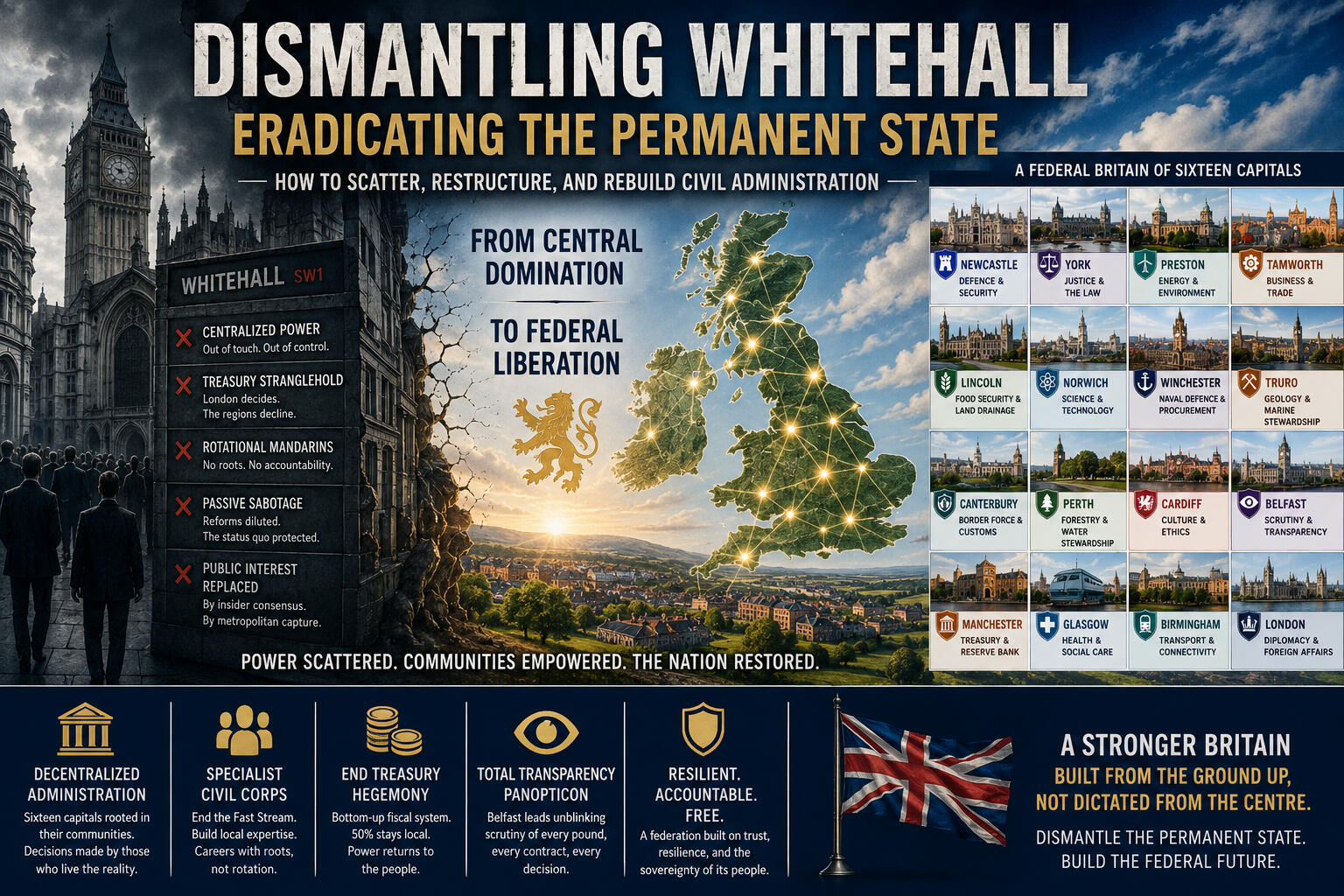
The UK governance model is afflicted by a toxic, chronic condition: hyper-centralisation. This is not merely an accident of history but the deliberate, sustained effort of an overarching political class convinced of its own superior knowledge.
The widely perceived crisis of public trust is not an unfortunate side effect of modern governance; it is a necessary condition for the preservation of the status quo. The true mechanism by which the political elite maintains control is the Democratic Deficit. This deficit is not accidental; it is a profound, structural gap between the promise of representative democracy and the practical reality of citizen power.
The decline in public confidence is a statistical freefall, quantifiably demonstrating that citizens doubt their leaders’ intent and competence. This decline represents a collapse of both transactional trust (belief in the government’s ability to deliver services) and, more dangerously, generalized trust (belief in the inherent honesty and integrity of the political class itself).
The crippling of the unions had an immediate and devastating effect on the Labour Party, the supposed voice of the common man. Losing its traditional funding stream and core identity, the party undertook a fundamental transformation designed not to reclaim its socialist roots, but to court the very corporate interests that had bankrolled its rival’s success.
Public faith in Parliament is at an all-time low, fueled by a relentless stream of financial scandals, ethical lapses, and a general sense of political exceptionalism. The current system relies on internal party mechanisms and non-binding parliamentary codes of conduct, which notoriously lack real teeth.
The current solvency crisis is not primarily one of mathematics; it is one of political cowardice driven by the disproportionate power of the elderly voting bloc. The system’s guaranteed collapse is inevitable because no politician dares to challenge the most politically powerful and reliable demographic: the elderly.