
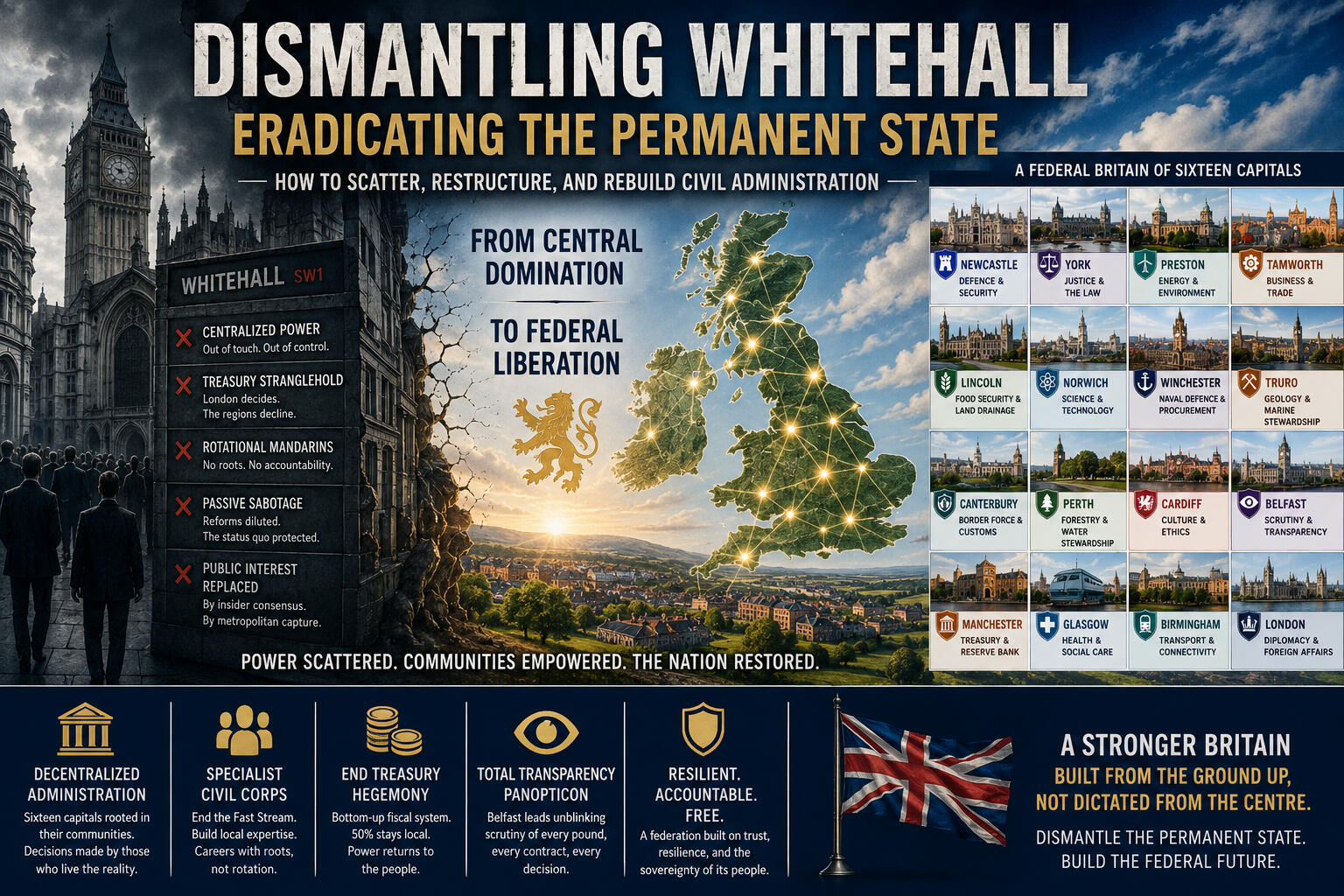
Dismantling Whitehall: Eradicating the Permanent State

Whitehall is not simply a collection of government offices; it is a highly centralised administrative system with its own incentives, institutional memory, and concentration of power. This article argues that a federal Britain cannot survive while that machinery remains intact, and proposes replacing the unitary civil service with a geographically dispersed network of regional and metropolitan administrations. Departments are rooted where their work actually happens, the Treasury is relocated away from London, specialist expertise replaces perpetual bureaucratic rotation, and an independent scrutiny system makes government radically more transparent. The result is intended to be a state that is less concentrated, more locally knowledgeable, more resilient to failure, and ultimately more accountable to the people it serves.

Continue Reading →

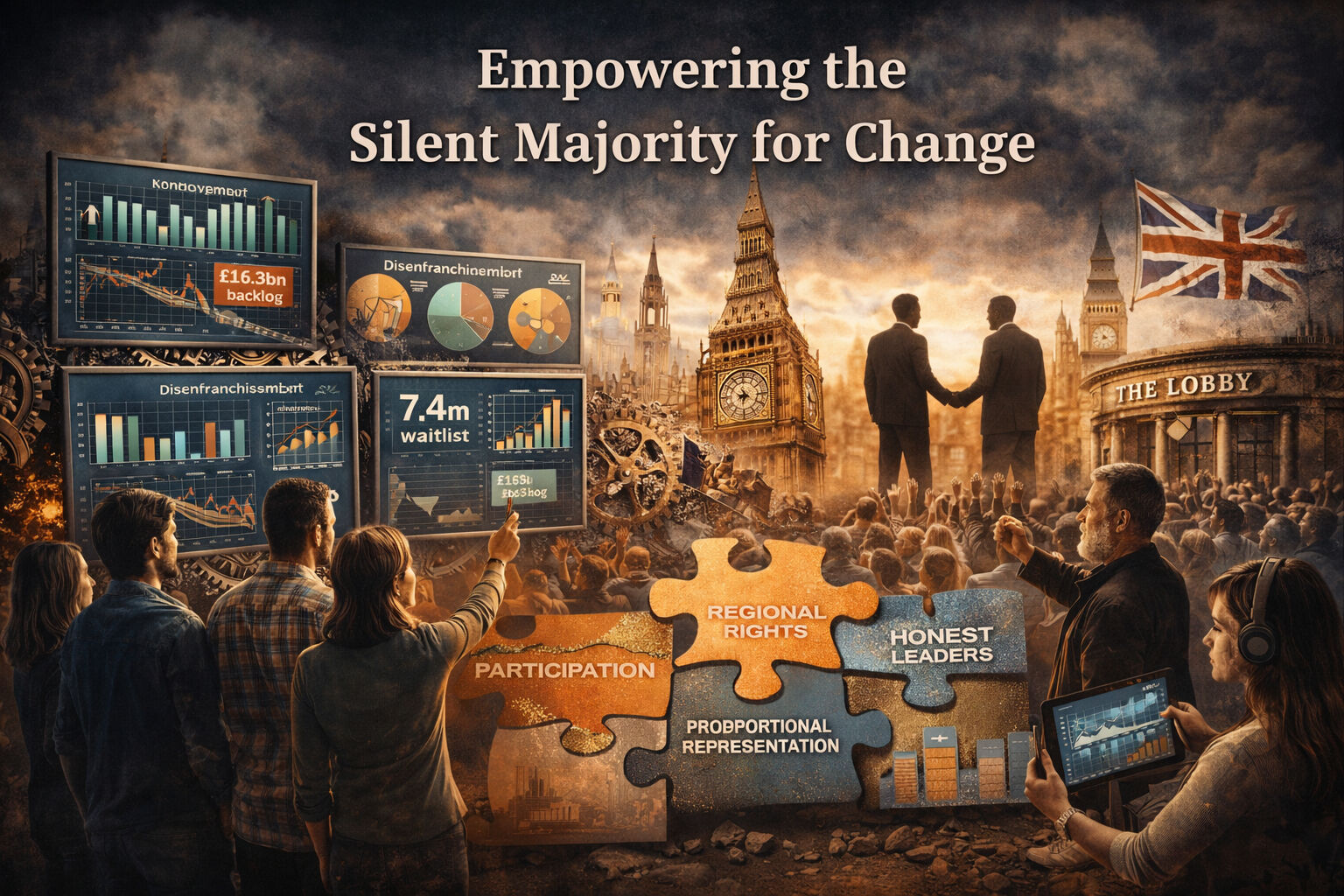
The Unheard Voices

It is the story of a “Silent Majority”—a group often dismissed by the metropolitan commentariat as apathetic or “left behind.” In reality, this majority is neither silent by choice nor apathetic by nature; they are exhausted.

Continue Reading →

The Stage of Discord

Modern corruption in Westminster rarely takes the form of brown envelopes; it is far more polite, codified in the language of “professional services.”. It is the seamless transition from the heights of public office to the boardrooms of the private sector.

Continue Reading →

The Thousand-Year Scar: How Centralized Power Forged the North-South Divide

The troubles facing the United Kingdom today are not just about modern debt or pandemics; they are rooted in historical…

Continue Reading →

The Disposable Generation: How the Corporate-Political Elite Declared an Age War on the Young 🧑‍💻

Older workers currently occupying these exact roles were often hired with no qualifications at all; they walked into a local business, “shook hands, and got the job,” without an interview, without a CV and often without even having finished formal education. Now, corporations demand a Bachelor’s degree for a job that is considered “entry-level,”

Continue Reading →